A patio enclosure is a set of screen or glass walls added to an existing covered patio, so the space stays usable in bugs, wind and rain. Its value comes from how many days you use it and how well it looks beside the house, not from a fixed return. The level of enclosure you pick decides most of that.
The short answer
- A patio enclosure adds value through more days of use and a better look, not through a fixed return.
- Choose the enclosure level for how you will use the space, since screened, glass and all-season rooms do different jobs.
- Frame color, panel size and roof line decide whether an enclosure looks designed or tacked on.
- Check the slab, roof, drainage and approvals before you enclose, because an enclosure is only as good as its base.
- Clay ground in Plano and Frisco can move a patio slab, so check it for cracks and slope.
- Skip the enclosure if the slab or cover is failing, and fix those first.
Enclosing a patio is the lighter way to gain a room. The roof, the slab and the footprint are often already there. What changes is the wall, and the wall is where most of the value, and most of the mistakes, come from.
What does a patio enclosure do for your home’s value?
It turns an outdoor space into a protected one, so you use it on more days. It also changes how that side of the house looks. Whether a buyer pays more for it depends on how finished the space is and how well it blends, and no one can promise a figure.
Think of value in two parts. The first is use: bug-free evenings, a dry place in a storm and shade in summer. The second is appearance: an enclosure that looks designed for the house adds to it, and one that looks tacked on takes away. You control both when you plan it.
Which level of patio enclosure fits your goal?
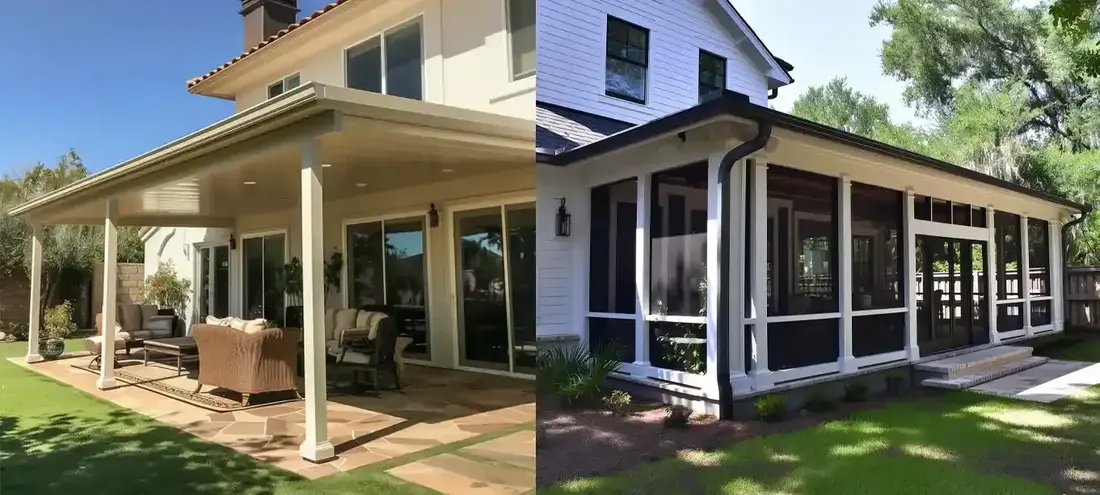
There are three common levels, and they do very different jobs. Pick the level for how you will use the space, then see how it looks. The table compares them.
| Level | What you get | Where it falls short |
|---|---|---|
| Screened enclosure | Air, shade and no bugs | No help in extreme heat or cold, and not heated living space |
| Glass-paneled enclosure | Wind and rain protection, more light, a longer season | Needs shading in summer and is not built for deep winter |
| All-season enclosure | Insulated glass and roof, with heating and cooling, usable most of the year | The biggest build, with more to approve and pay attention to |
Do not buy the top level for a room you will use twice a month. Do not buy the bottom level and expect a winter office. Our post on the advantages of enclosing your patio goes into the use side.
How does a patio enclosure change curb appeal?
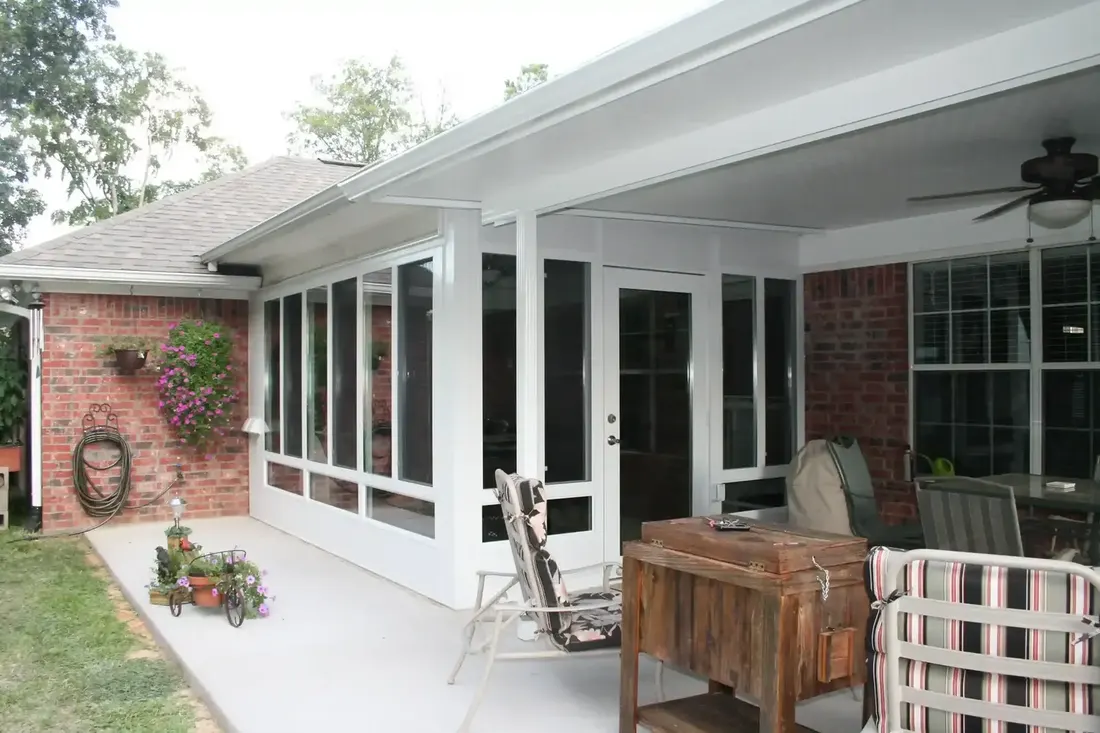
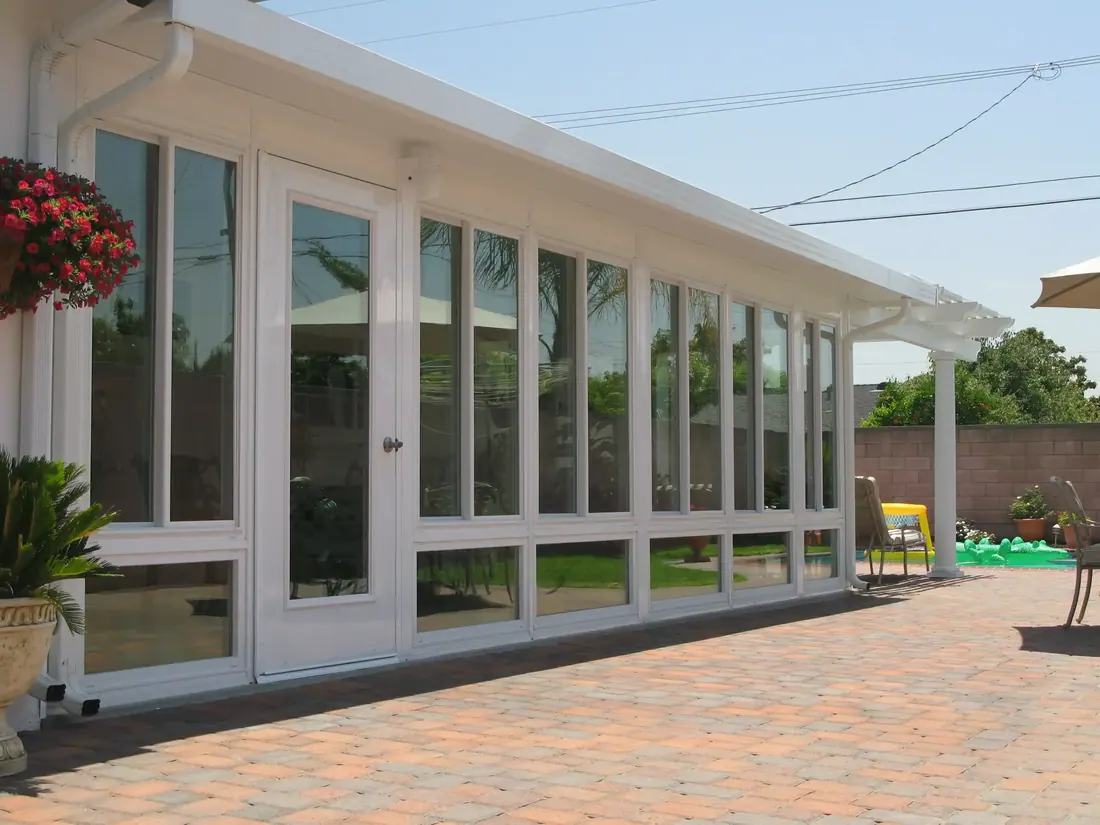
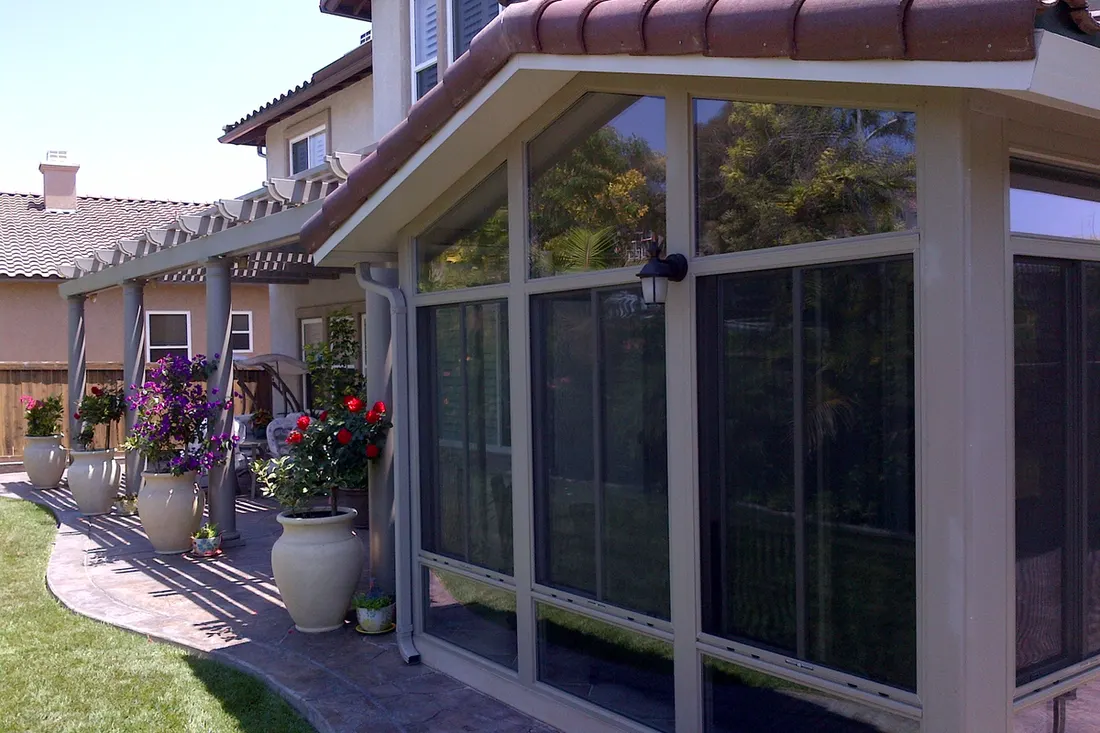
Most enclosures face the backyard, so appearance matters most from the yard, from the neighbors' view and in listing photos. Frame color, panel size and the roof line carry the look. Enclosures read best when the frame color echoes the house trim and the panels repeat the proportions of your windows.
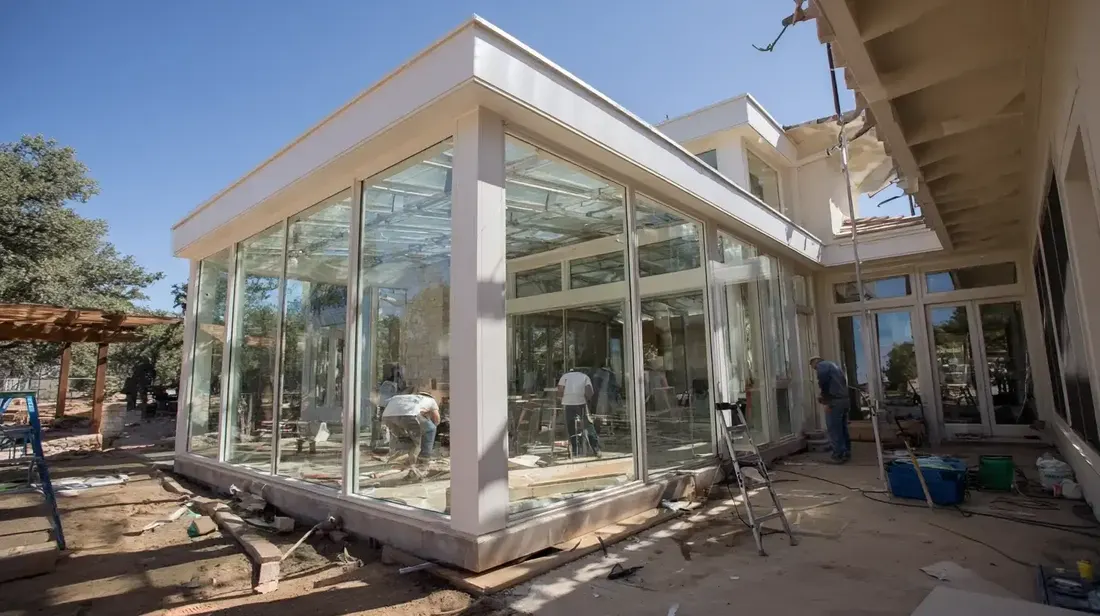
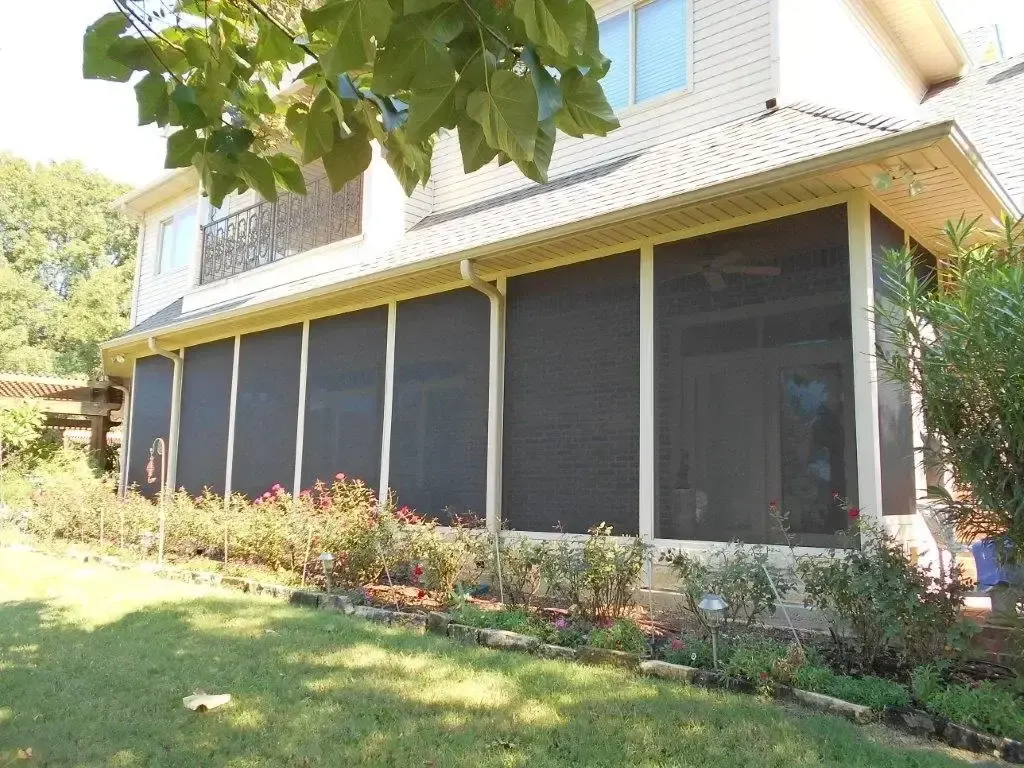
Dark screens read as deep openings and keep a quiet look from the lawn. Large panes show off the room but also show clutter. A full-glass wall facing west brings the view and the heat together, as anyone who sat through the summer of 2023 can tell you, so plan shade on that side from the start.
Upkeep changes the look too. Sun fades frames, screens can sag, and a gutter that drains into the enclosure leaves streaks. A clean, tight enclosure looks like part of the house. A sagging one looks like a project left half done.
What should you check before you enclose a patio?
Check the slab, the roof, the drainage and the approvals. If any one of them fails, fix it first. An enclosure is only as good as what it sits on and under.
- Slab: look for cracks, heaving, and slope toward the house. Much of Plano and Frisco sits on Blackland clay that moves with the seasons, and a patio slab can move with it.
- Roof: confirm the existing cover can carry the added walls and tie into the house wall without leaks.
- Drainage: water should run away from the enclosure, not under it.
- Approvals: check your city’s rules, such as Plano’s residential permits or Frisco’s, and ask your HOA if you have one.
Plano lots are mostly flat, fenced and fully landscaped, so an enclosure there is nearly always a retrofit. Getting materials past the existing yard without damaging it is part of the planning. Our permit guide lists what to bring to the city.
What should you plan inside an enclosed patio?
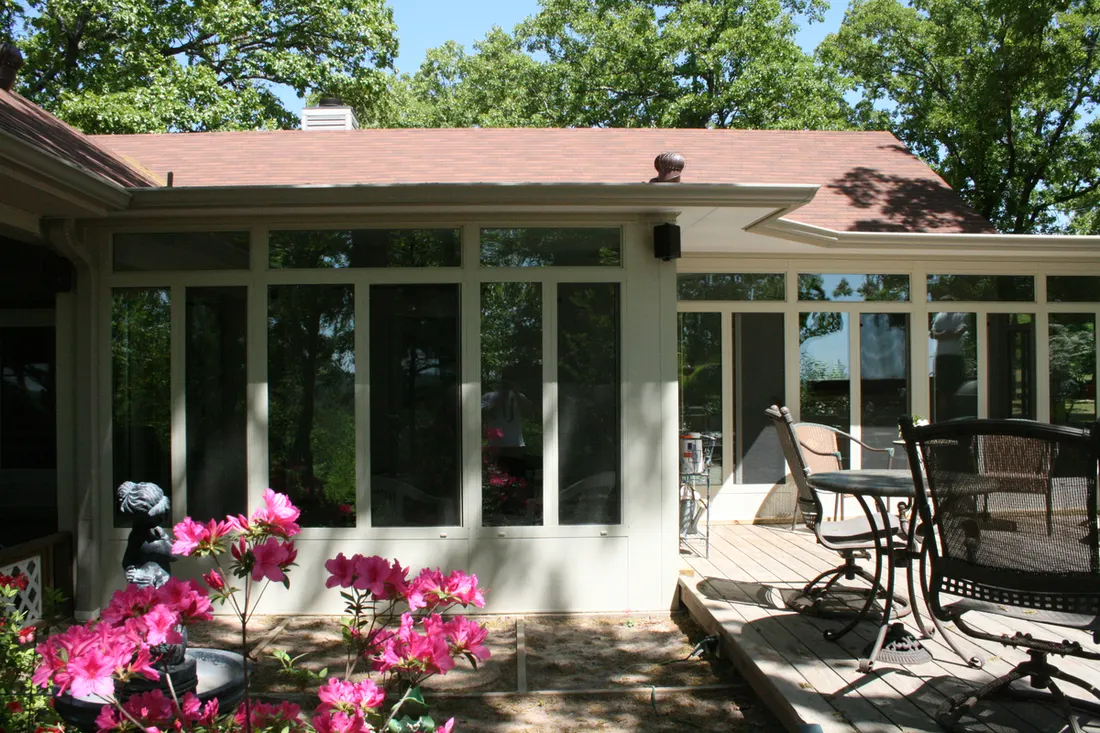
Plan the things that are hard to add later, mainly power, light and air. A patio that was open for years usually has no outlets, one dim fixture and no moving air. Enclosing it without fixing that gives you a walled space that is dim and still.
Put outlets where the furniture will go, not where the wall happens to be bare. Choose a ceiling fan if the roof allows one, and pick warm lighting you can dim. Then decide the floor. A bare slab is fine for a screened room, but a room you want to use in winter feels better with a rug or a finished surface over it.
Leave walking space. An enclosed patio is smaller than it felt when it was open, because the walls take up room and the furniture now has a back. Measure before you buy a sofa.
When is enclosing a patio a bad idea?
When the patio is your only open outdoor space and you like it open, when the slab is cracked and tilts toward the house, or when you want a sun-washed winter room but have only a screen in mind. Enclosing can also be the wrong move if the cover over the patio is weak. Fix the cover first.
If you are weighing a sunroom against an enclosure, our post on the difference between a patio and a sunroom will help, and converting a patio into a sunroom covers the bigger step.
American Eagle Builders has served Dallas–Fort Worth since 1984 from our home base in Arlington, as a family-owned company. See our patio enclosures or book a free in-home estimate, and we will check the slab and roof before we talk about walls.
Questions we get asked about this
It can, depending on how finished it is, how it looks and whether it was permitted. There is no fixed return. A well-built, all-season room is worth more to a buyer than a screen that is used a few weeks a year. Build it for the days you will use it.
A screened enclosure keeps out bugs and gives shade and air. A glass enclosure blocks wind and rain and lets in more light but needs shading in summer. Neither is the same as an insulated all-season room that has heating and cooling.
It depends on your city and the type of work. Rules differ from city to city, so check with your permit office before you start. Plano, Frisco and many other cities post their residential permit information online. An HOA may also need to approve it.
Not always. The slab has to be sound, the roof has to carry the load, and water has to drain away. A cracked or sloped slab, common on shifting clay, should be fixed first. A builder can check all of this at a visit.
Yes. We install patio enclosures across Dallas–Fort Worth and give free in-home estimates. We check the slab, roof and drainage you already have first, so the enclosure goes on something sound.