Choosing between a pergola or sunroom comes down to what you want protection from. A pergola is an open-roofed frame that breaks up the sun. A patio cover adds a solid roof, an enclosure adds screens or glass walls, and a sunroom is a sealed room you can heat and cool. Each step adds protection and adds work.
The short answer
- A pergola, a patio cover, an enclosure and a sunroom form a ladder of protection, with each step adding more building.
- Start from the problem you want solved, such as sun, rain, bugs or year-round use, and pick the lowest step that solves it.
- A pergola shades but does not keep out rain, bugs or heat, so it cannot do the job of a sunroom.
- North Texas heat, storms and freezes decide how much protection you need, and soil decides how footings are built.
- Check your city’s permit rules, your HOA and your slab before you commit to a design.
- If you may enclose a covered patio later, build the structure to carry walls from the start.
People start this decision with a picture they like. A better start is the problem they want solved: too much sun, rain that spoils plans, bugs, or a summer that keeps them indoors. The structure follows from that, and most yards only need one of the four.
What is the difference between a pergola, a patio cover, an enclosure and a sunroom?
They form a ladder of protection. Each step up keeps out more of the weather and takes more building. Pick the lowest step that solves your problem, because the higher steps cost more effort and more upkeep than most yards need.
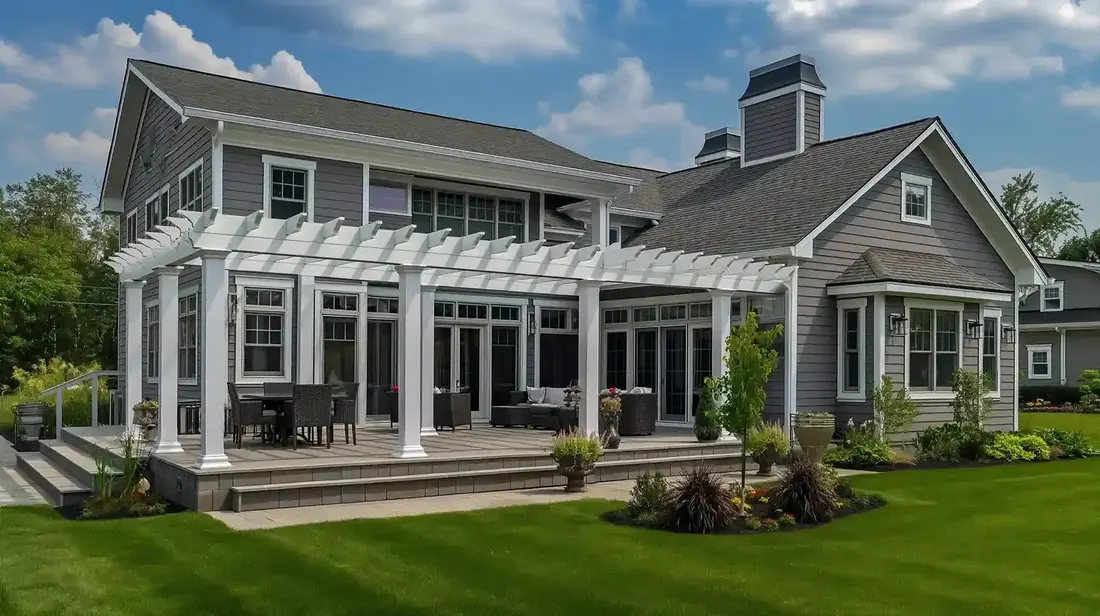
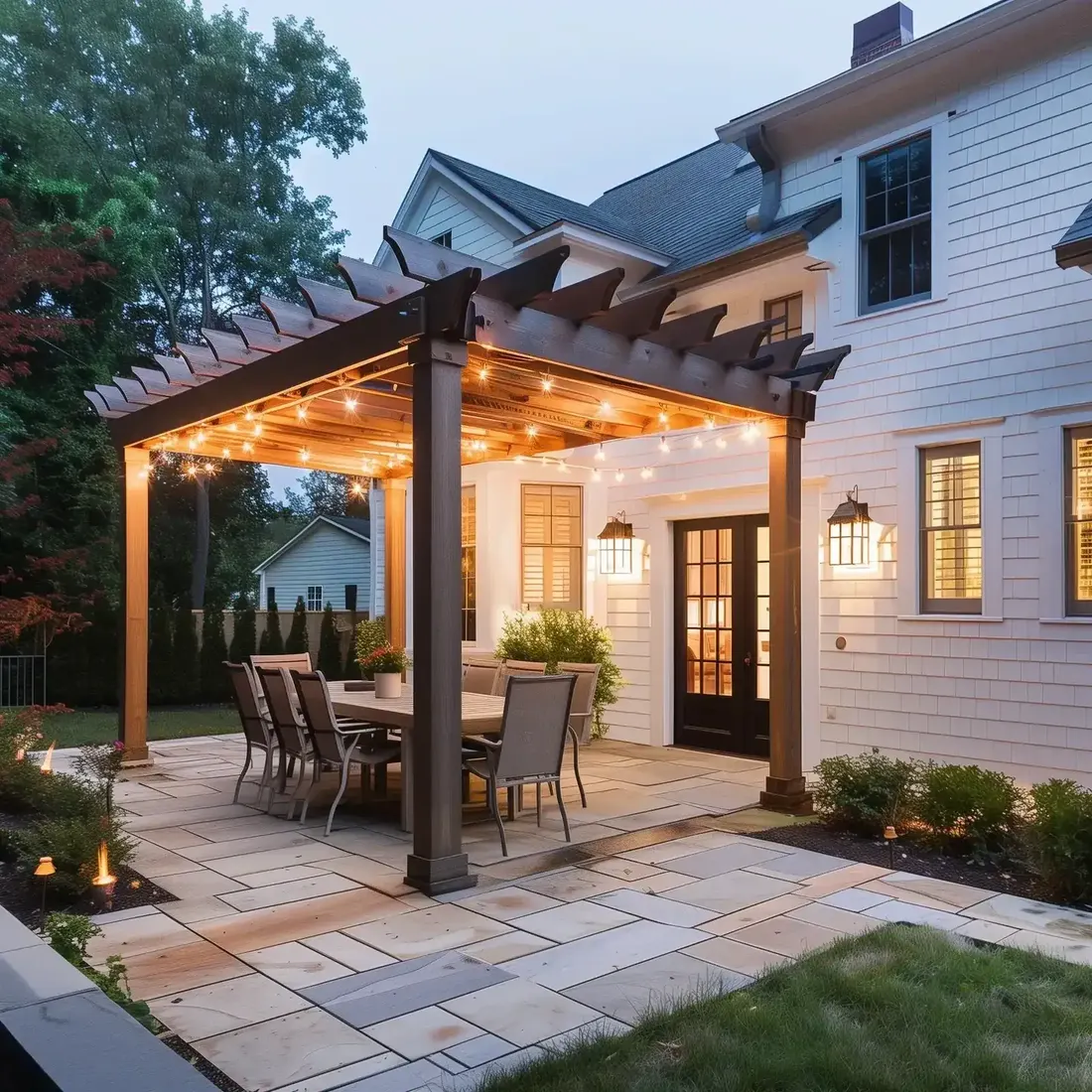
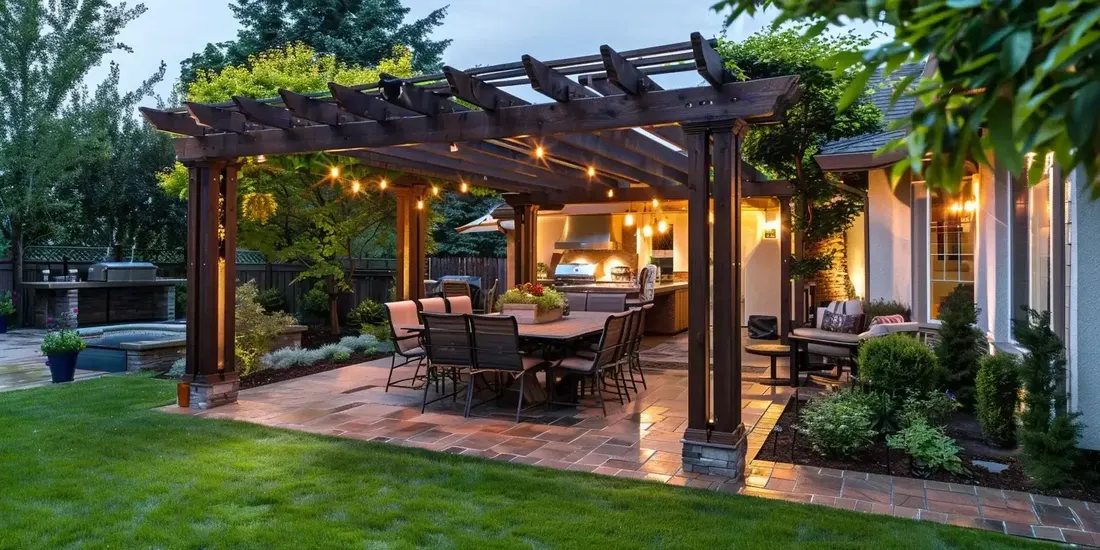
- A pergola is an open-roofed frame of posts and beams that breaks up the sun and gives a place to gather.
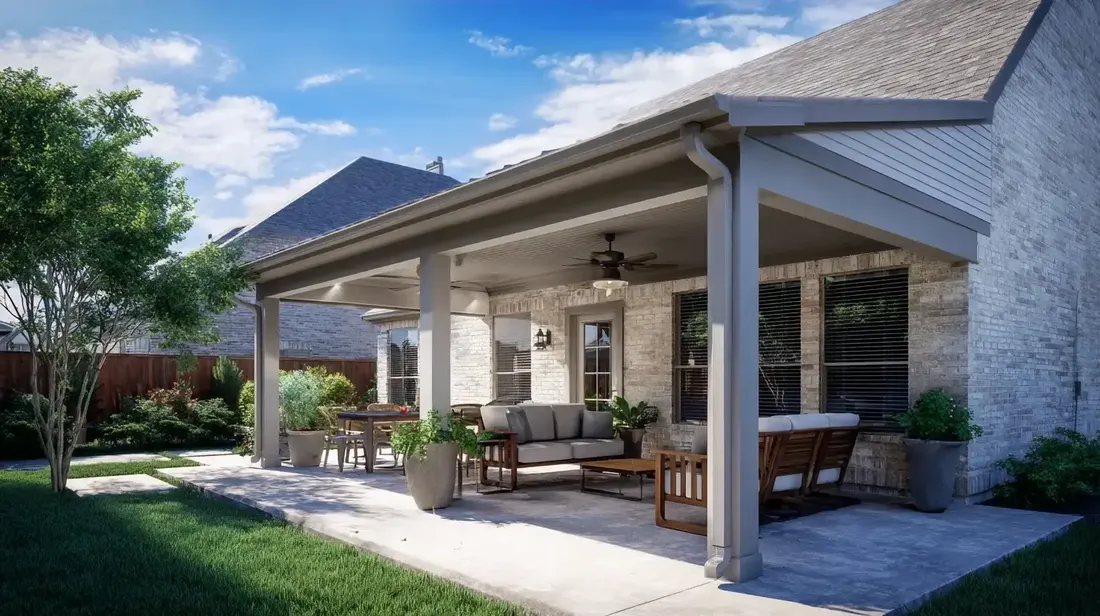
- A patio cover is a solid roof on posts, so it keeps off sun and rain but leaves the sides open.
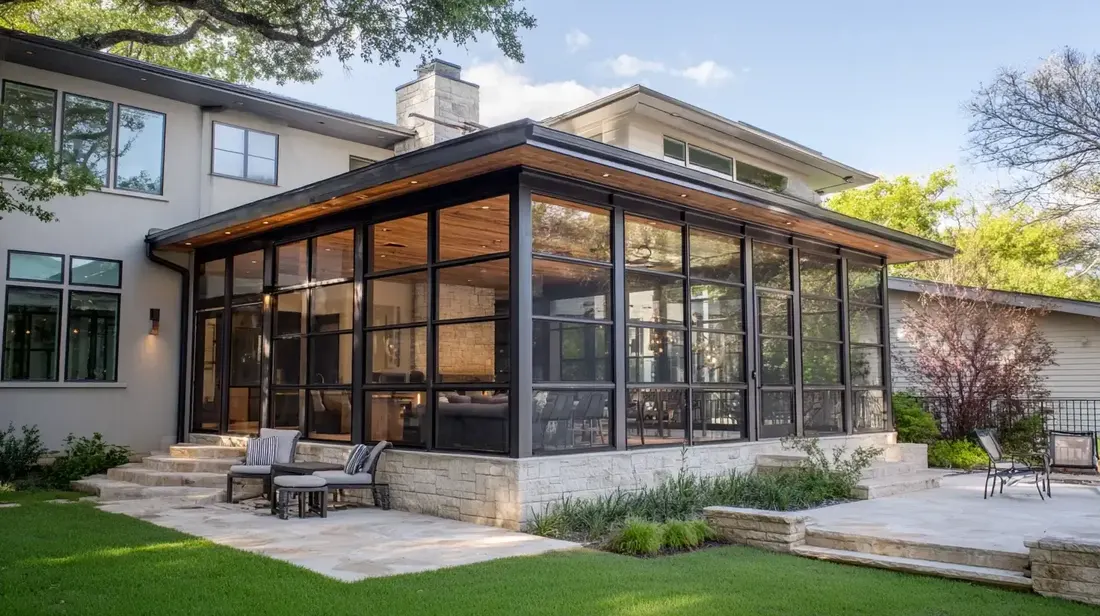
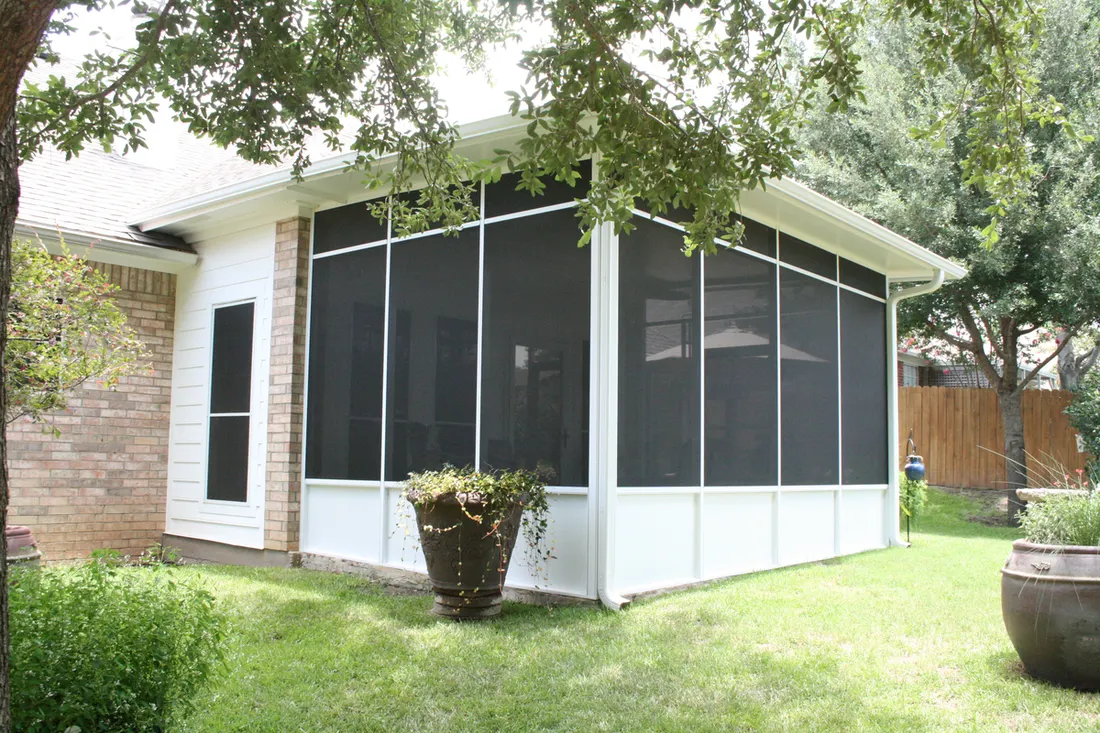
- A patio enclosure adds screen or glass walls to a covered patio, so bugs and wind stay out.
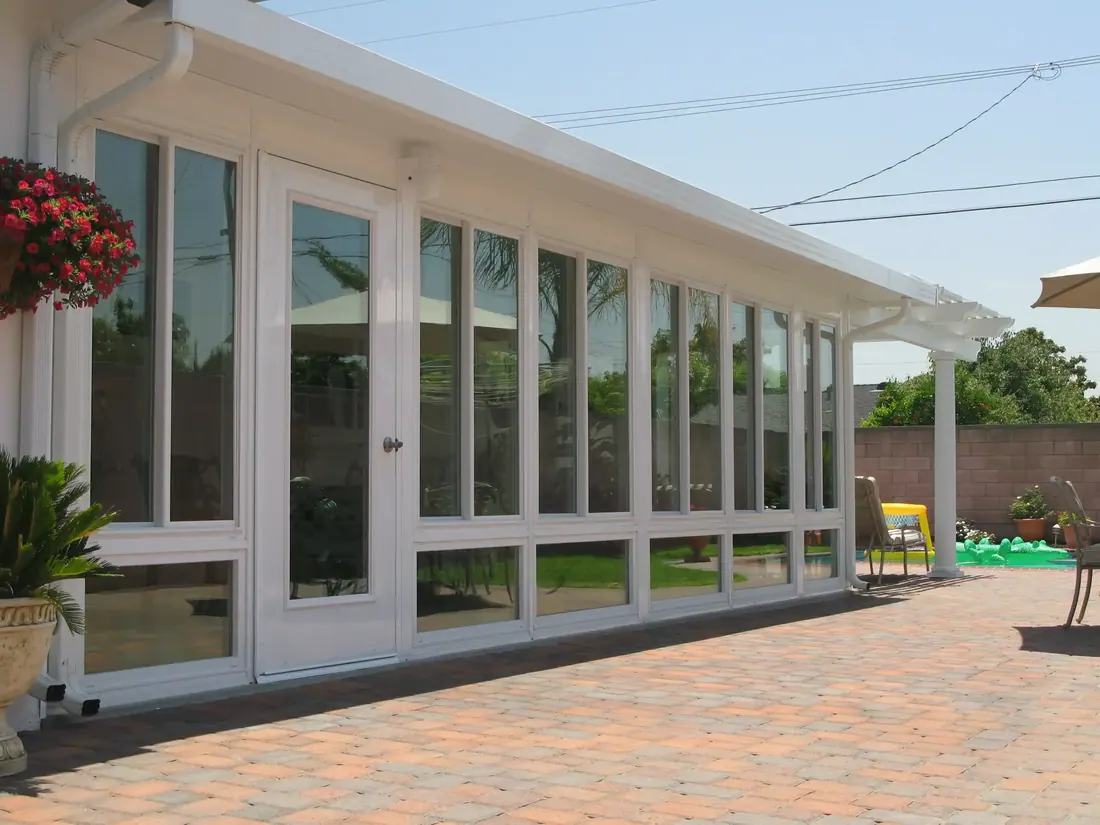
- A sunroom is a sealed, insulated glass room that can be heated and cooled for use through the year.
How do you choose between a pergola or sunroom?
Match the structure to the weather you want to beat. If you want shade on a mild evening, a pergola is enough. If you want a dry place in a storm, you need a solid roof. If you want to use the space in July or January, you need a sealed room. The table lays out the trade-offs.
| Structure | Sun | Rain | Bugs | Usable in July or a freeze |
|---|---|---|---|---|
| Pergola | Partial shade | No cover | No | No |
| Patio cover | Full shade | Yes, from above | No | Shaded only |
| Patio enclosure | Full shade | Yes, with glass | Yes | Mild weather only |
| Sunroom | Controlled by glass and shading | Yes | Yes | Yes, if built all-season |
A quick test can sort most yards. Ask three things. Do you need to stay dry? Do you need to stay bug-free? Do you need to be comfortable in extreme weather? Zero yeses points to a pergola. One yes for rain points to a patio cover. A yes for bugs points to an enclosure. A yes for extremes points to a sunroom. Mixed answers are a reason to ask for estimates on two options.
Our posts on the difference between a patio and a pergola and on patio covers versus open patios go deeper on the lower steps.
What does North Texas weather ask of each one?
Heat, storms and the occasional hard freeze. The long heat of summer 2023 pushed shade up the list for many homeowners, and the December 2022 freeze reminded them that a roof is not a heater. Neither extreme is solved by an open frame. An open pergola shades a table but does little for a July afternoon or a thunderstorm.
The National Weather Service office in Fort Worth posts local forecasts and climate information for the region. Use it to count how many days a year you would really use each option.
The ground matters too. Posts and footings go in the soil, and North Texas has more than one kind. In Plano and Frisco the clay moves with the seasons. In Fort Worth the soil is thin over limestone, and the dig can hit rock. Both are reasons to ask a builder about footings before you fall for a design.
What should you check before you choose?
Check your city’s permit rules, your HOA, and the condition of any slab you plan to build on. All three can change what is allowed or what it takes. Rules differ from city to city, so do not assume a neighbor’s answer applies to you.
- Permits: ask your permit office before you start. Arlington and Dallas each post residential permit information online.
- HOA: many associations review roof lines, colors and materials before approving an exterior structure.
- Slab: an existing patio has to be sound, and flat enough to carry posts or walls.
- House wall: a roof that ties into the house must be flashed against water at the joint.
How much upkeep does each option need?
Less than you may expect at the bottom of the ladder, and more at the top. A pergola needs its finish looked at and any loose hardware tightened. A patio cover needs its roof and gutters kept clear. Screens in an enclosure wear and tear, and a sunroom has glass, seals and equipment to look after.
None of that is hard, but it adds up. Before you decide, ask yourself whether you will clean glass, replace a screen or service a cooling unit. A structure you do not maintain will look worse in a few summers than a simpler one you did.
There is also a middle path. Some homeowners build a patio cover first, live under it for a season and then decide whether walls are worth adding. That works well if the structure is designed for it from the start, and it gives you a real sense of how you use the space before you commit to more.
When is each option not worth building?
A pergola is not worth it if you expect it to keep you dry or cool by itself. A patio cover is not worth it if the real problem is bugs or winter cold. An enclosure is not worth it if you want a winter office. A sunroom is not worth it if you will use the room a few weeks a year. Our post on sunroom versus screen room works through the last two.
From our base in Arlington, American Eagle Builders, a family-owned company, has served Dallas–Fort Worth since 1984. We install patio covers, pergolas, enclosures and Four Seasons sunrooms. See our patio options and sunrooms, or book a free in-home estimate, and we will tell you which step fits your yard.
Questions we get asked about this
A pergola is an open frame that shades and does not keep out rain, bugs or heat. A sunroom is a sealed glass room with an insulated roof that can be heated and cooled. They solve different problems, and many yards need only one.
It depends on the problem. A patio cover has a solid roof, so it keeps off both sun and rain. A pergola is open, so it breaks up the sun and lets air move. Choose the cover if you want a dry place in a storm.
Sometimes. The roof, posts and slab have to be designed to carry walls. If you think you might enclose it later, say so at the first visit so the structure is built for it. Retrofitting a roof that was not meant to carry walls is hard.
It depends on your city and the structure, and rules differ across Dallas–Fort Worth. Check with your city’s permit office before you start. Arlington, Dallas and many other cities post their residential permit pages online.
Yes. We install patio covers, pergolas, enclosures and Four Seasons sunrooms, and give free in-home estimates across Dallas–Fort Worth. We will tell you which step fits your yard and weather before we draw anything.