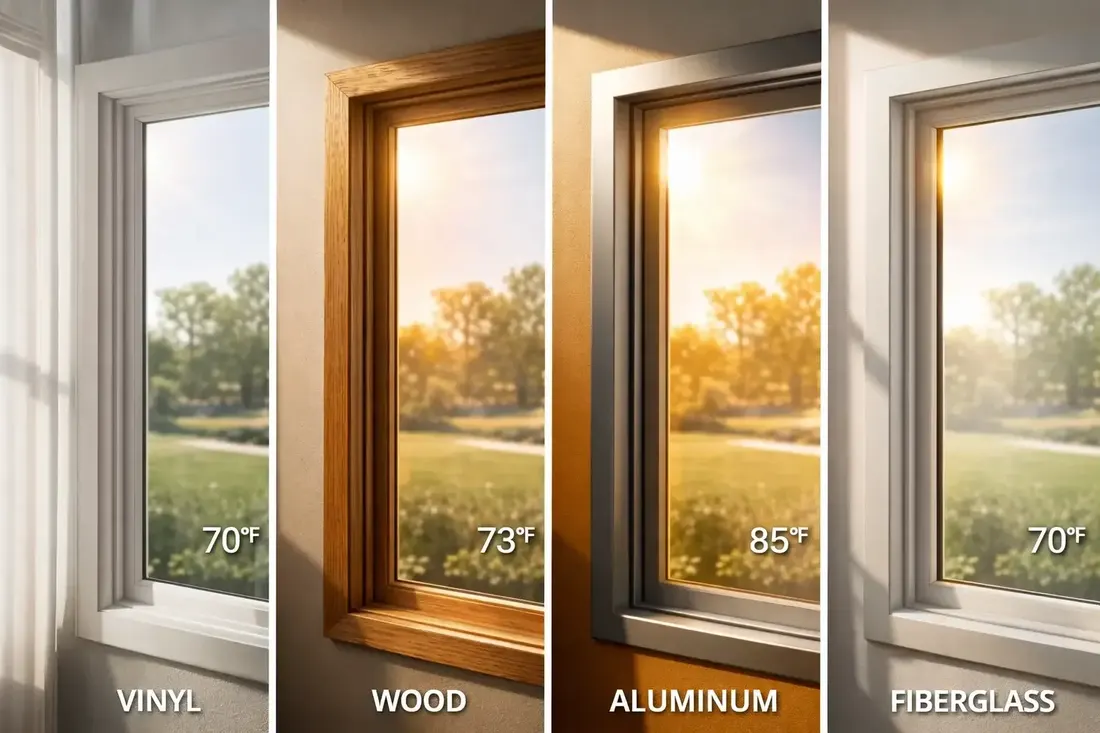
Window frame materials are the substances a window’s frame is made from: vinyl, wood, aluminum, fiberglass or a composite. They differ in how they handle heat, how much upkeep they want and how slim they can look. In North Texas, the best choice is the one you will keep up, on a wall that suits it.
The short answer
- Window frame materials differ in three ways: how they handle heat, how much upkeep they want and how slim they look.
- The finish usually fails before the material does, so a frame that keeps its finish with little work suits Texas sun.
- Pick by upkeep first and looks second, because a frame you will not maintain looks worse than a plain one.
- Aluminum needs a thermal break to avoid passing heat straight through the frame.
- Keep the frames you see from the street consistent, and use simpler lines in rooms that are out of sight.
Glass does the job you notice least. The frame is what you see, touch and maintain for as long as you own the windows. That is why the frame deserves more thought than it usually gets, and why the answer changes from one house to the next.
What are the main window frame materials?
There are five in common use: vinyl, wood, aluminum, fiberglass and composite. Each makes a different trade between three things: how well it handles heat, how much upkeep it asks for, and how slim and sharp the frame can look. The table sums up each one for North Texas conditions.
| Material | In Texas sun | Upkeep | Where it fits |
|---|---|---|---|
| Vinyl | Expands and contracts with heat, and dark colors absorb more sun | Cleaning only, with no painting | Whole-house replacements where low upkeep is the goal |
| Wood | Insulates well, but the exterior finish wears in sun and rain | Sealing or repainting on a schedule | Interiors, and traditional homes where you want real wood |
| Aluminum | Strong and slim, but conducts heat unless it has a thermal break | Light, if the finish is good | Modern homes with large glass and slim sightlines |
| Fiberglass | Steady through temperature swings | Low, and some can be painted | Homes where the frame must stay stable and tidy |
| Composite | Blends materials for stability and a finished surface | Low, with no painting on a factory finish | Whole-house jobs where you want less upkeep |
A thermal break is a strip of low-conducting material set between the inside and outside of a metal frame. It slows the heat that metal would otherwise pass straight through. If you like the look of aluminum, ask for it. The Efficient Windows Collaborative has plain-language notes on frame types if you want to read further.
Which frame material handles Texas sun best?
No material wins outright. What usually gives out first in North Texas is the finish: paint on bare wood, color on a dark frame, or the coating on metal. A frame that keeps its finish with little work, and does not pass heat easily, handles the sun best.
Think about the wall as much as the material. A west wall that takes full afternoon sun is hard on any finish. After a hot summer like 2023, frames on those walls are the ones that show wear first. A north wall is gentler, and a wood frame there has an easier life than the same frame on the west side.
If you are replacing a frame that has failed, look at how it failed. Peeling paint, chalky color, a warped joint and a gap at a corner each point to a different cause. Each one also tells you what to avoid on the new window, so take photos before the old one comes out.
Should you pick a frame by upkeep or by looks?
Pick by upkeep first, then by looks. A frame you will not maintain will look worse in five years than a plain one you ignored on purpose. Ask yourself honestly how often you paint, seal or scrub, and let that answer narrow the field.
- If you never want to paint: look at composite, fiberglass or a clad exterior.
- If you want real wood to match the trim inside: a wood interior with a protected exterior gives you both.
- If you want slim frames and big glass: aluminum or an aluminum-clad window, with the thermal break confirmed.
- If the house has a defined style, such as a Craftsman or a Colonial: let the style pick the frame proportions first.
Two honest warnings. Do not put bare wood on a west wall unless you will refinish it on schedule. And do not choose plain aluminum for a sunny wall unless it has a thermal break.
Ask to see a corner sample of any frame you are considering. Look at the joint where the pieces meet, feel the weight of the sash and open and close it a few times. Then hold the finish samples against your own house in daylight, not under a showroom lamp. Colors shift with the sun, and one that looks right indoors can look different outside.
How do the Andersen frames compare?
We install four Andersen lines, and each uses a different frame idea. The 100 Series uses a composite frame finished inside and out, so there is nothing to paint. The 400 Series pairs a wood interior with protective cladding outside. The A-Series is built around architectural styles. The E-Series is made to order, with an aluminum-clad exterior and a choice of interior woods.
The Andersen website has the specifications for each line, and we are happy to walk through them with you. On a brick house in Plano or Arlington, a wood interior can tie the windows to existing trim. In a house with a plain interior, a composite frame is often the simpler path.
Can you mix frame materials in one house?
Yes, if the mix is hidden or planned. A different frame in a back bedroom is rarely noticed. A different frame beside the front door will be. Keep what you see from the street consistent in color, proportion and grille pattern, and let rooms that are out of sight use a simpler line.
For more on how frames affect comfort, read our post on frame materials and Texas heat. If you are deciding between numbers on a label, U-value and SHGC explains them. To keep the style right on the front of the house, see matching doors and windows to your home’s style. We offer free in-home estimates across Dallas–Fort Worth.
Questions we get asked about this
No single material is best on every wall. Look for a frame that keeps its finish with little upkeep and does not pass heat easily. Composite, fiberglass and well-made clad frames do well. Dark finishes and bare wood on west walls need the most care.
They can be, especially where low upkeep is the goal. Vinyl expands and contracts with heat, so frame quality and color matter, and dark colors absorb more sun. Ask the maker about the finish and its warranty for a wall that takes afternoon sun.
Standard aluminum conducts heat well, so it passes heat through the frame. A thermal break, a strip of low-conducting material between inside and outside, reduces that. If you want slim aluminum frames, ask whether the window has one.
A wood exterior needs sealing or repainting on a schedule because sun and rain wear the finish. A wood interior is much easier, since it sits indoors. A window with a wood interior and a protected exterior gives you the look without most of the work.
We install the Andersen 100 Series, 400 Series, A-Series and E-Series. American Eagle Builders is a family-owned remodeler in Arlington and has served Dallas–Fort Worth since 1984. A free in-home estimate lets us look at your house and your upkeep habits and then point to the line that fits both.